


Designing & Installing a 2-foot-deep Aquascape Style Koi Pond in Bloomington, MN & Surrounding Areas
Designing and installing a 2-foot-deep Aquascape style, ecosystem koi pond is a rewarding project that can transform your outdoor space into a peaceful retreat. Urban Landworks knows how to do this to achieve the best results in the Hennepin, Ramsey, Dakota, Scott, Carver, or Anoka County surrounding areas. Here’s a step-by-step guide to help you plan and execute the installation of a koi pond, that you can enjoy for years to come!
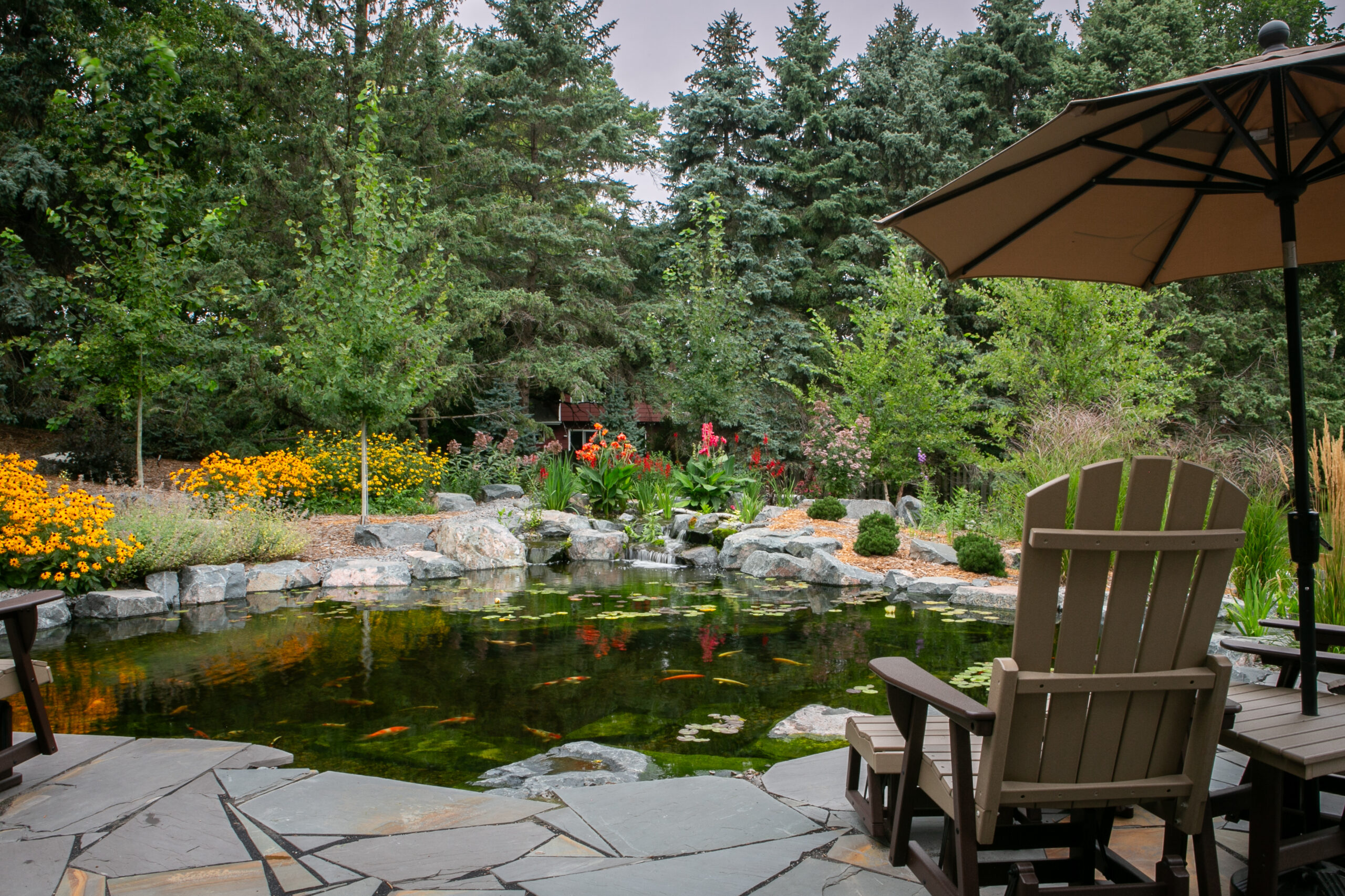
Materials You Will Need:
- Pond liner (EPDM or similar)
- Underlayment (geotextile fabric)
- Pond pump and filter system (appropriate for koi)
- Skimmer (optional)
- Biofalls or waterfall feature (optional)
- Rocks and boulders for edging
- Pond plants (for biological filtration)
- Koi fish (after the pond is cycled)
- Shovel, rake, and tamper
- PVC pipes or tubing (for plumbing)
- Water dechlorinator or conditioner
Steps to Design & Install a 2-Foot Deep Koi Pond:
1. Planning the Pond
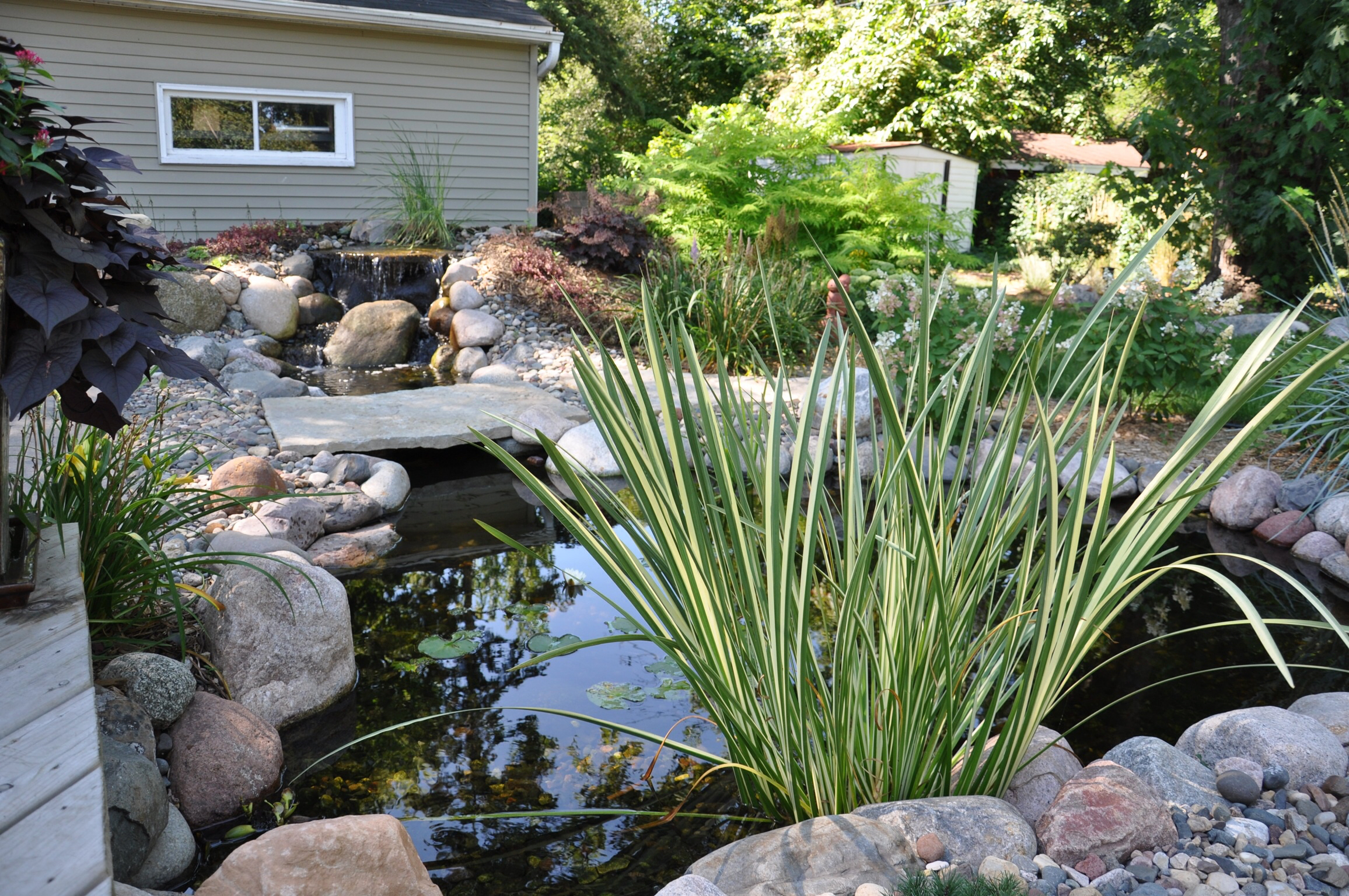
- Size and Location: Choose a location that receives partial sunlight. Too much sunlight can lead to excessive algae growth, and too much shade may inhibit plant growth. Ensure it’s clear of tree roots and underground utilities.
- Shape and Depth: For koi, a pond depth of at least 2 feet is recommended, but deeper is better for their health and for minimizing temperature fluctuations. Koi need enough space, so consider at least 7-10 feet in length and 5-6 feet in width, depending on the number of fish.
2. Excavation
- Mark the Shape: Use a garden hose or spray paint to outline the pond’s shape.
- Dig the Hole: Dig to a depth of at least 2 feet. Consider adding a deeper section or varying depths for koi to thrive in different water layers and to create a natural look.
- Shallow Shelf: Create a shelf about 12-18 inches below the surface along the edge of the pond for placing aquatic plants.
- Remove Debris: Ensure the bottom is smooth and free of sharp rocks or roots that might damage the liner.
3. Install the Underlayment and Liner
- Add Underlayment: Lay the geotextile fabric or underlayment to protect the pond liner from punctures. It also helps create a stable base.
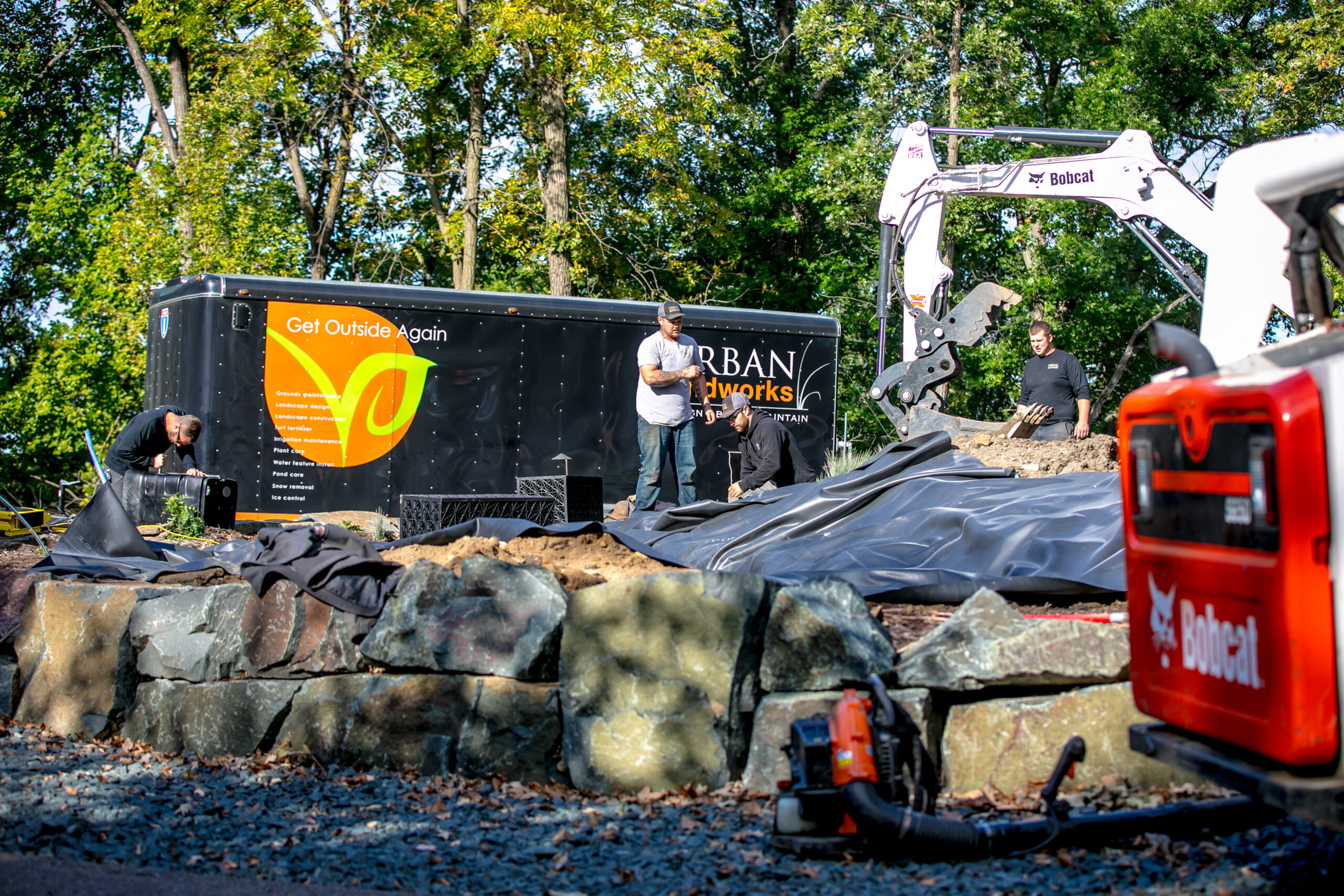
- Install Pond Liner: Lay the pond liner over the underlayment, ensuring it extends a few feet beyond the edges of the pond. This extra liner will help prevent leaks. Smooth out any wrinkles, but don’t overstretch it.
4. Plumbing and Filtration System
- Install the Pump: Place the pump at the bottom of the pond in a protective housing to keep it free from debris. The pump should be strong enough to circulate the entire volume of water in the pond every hour or two.
- Install a Filter: A biological filter is essential for koi ponds to break down harmful waste. Position the filter where it can be easily accessed for cleaning.
- Add a Skimmer (Optional): If you want to keep the pond free from floating debris, consider installing a skimmer. This will draw water into the filtration system from the pond’s surface.
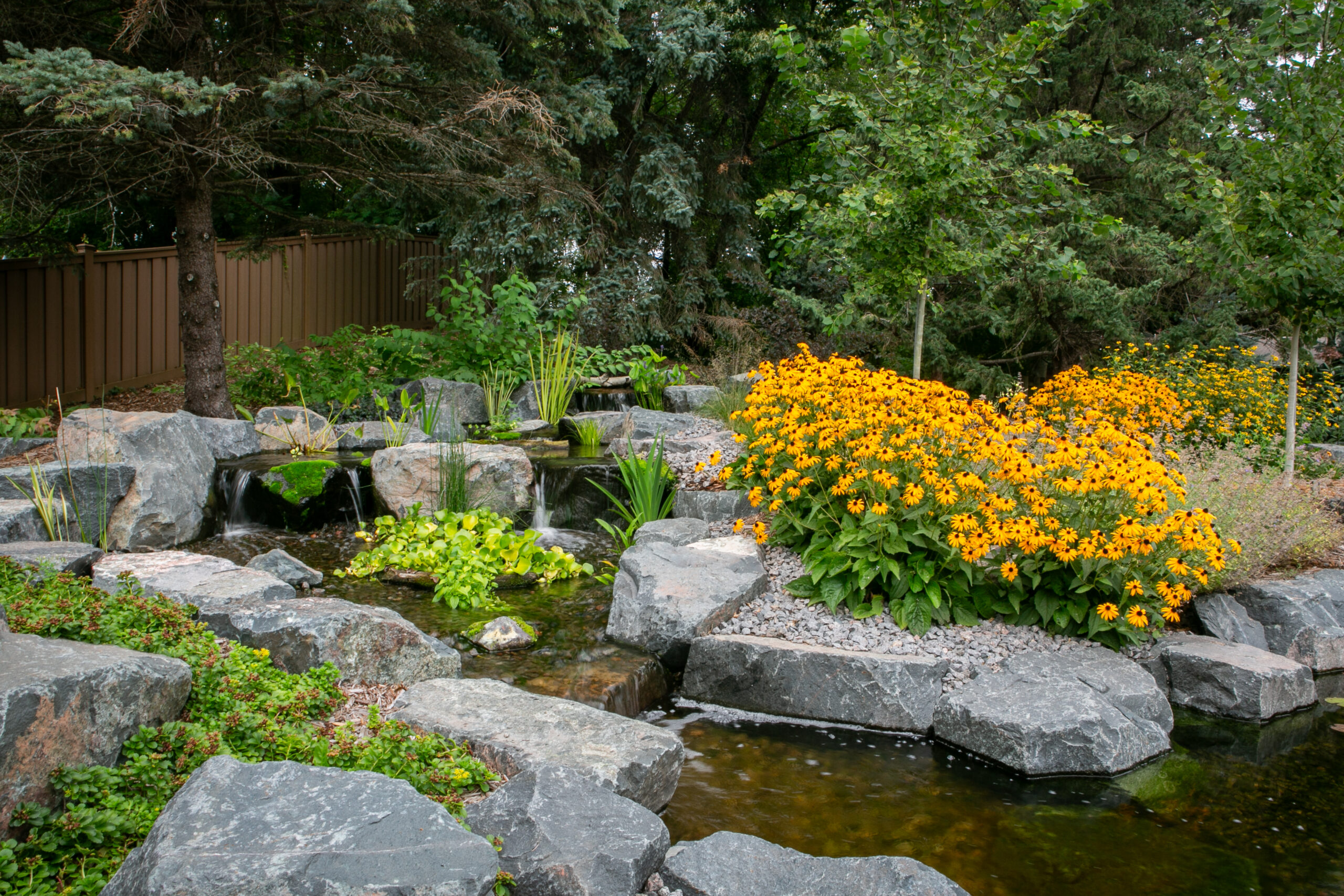
- Install a Waterfall or BioFalls Feature (Optional): If you plan to have a waterfall, set up the piping and positioning during this stage. Waterfalls are a great way to oxygenate the water for the koi.
5. Edge The Pond
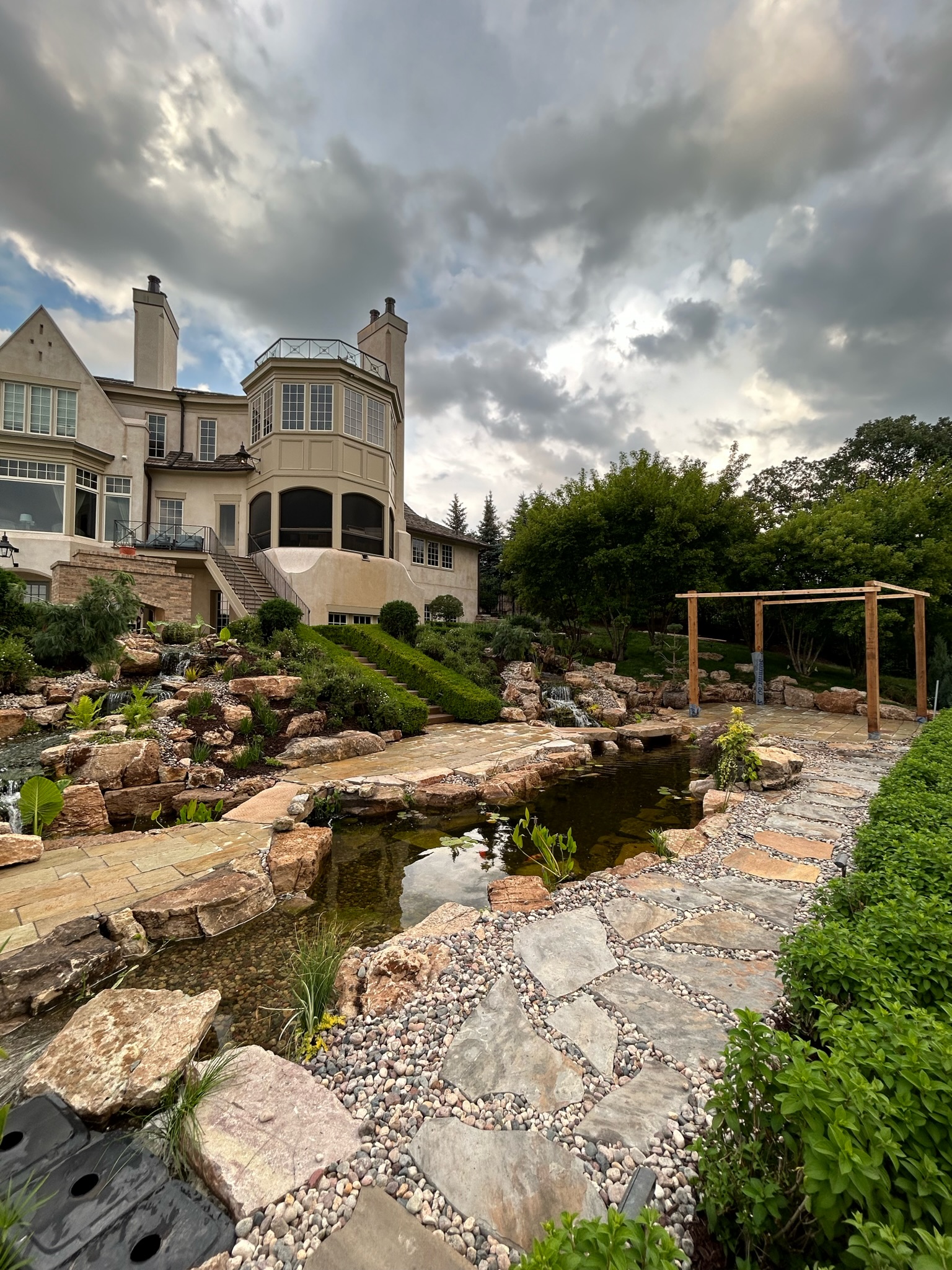
- Lay Rocks and Boulders: Place large rocks or boulders around the edges to hold down the liner and create a natural-looking border. You can use a combination of large stones, gravel, and smaller rocks for a more organic look.
- Hide the Liner: Fold or cut the liner to hide it under the rocks, making sure no liner is visible above the water level.
6. Fill the Pond with Water
- Fill Slowly: Begin filling the pond with water. As the pond fills, adjust the liner and rocks to ensure everything stays in place.
- Water Treatment: Use a dechlorinator or pond conditioner to remove harmful chemicals from tap water before introducing plants or fish.
7. Cycle the Pond
- Allow the Pond to Cycle: Before adding koi, allow the pond to cycle. This means running the filtration system for a few weeks, adding beneficial bacteria, and testing the water quality for ammonia, nitrites, and nitrates. This process establishes the beneficial bacteria needed for a healthy koi pond.
8. Add Plants
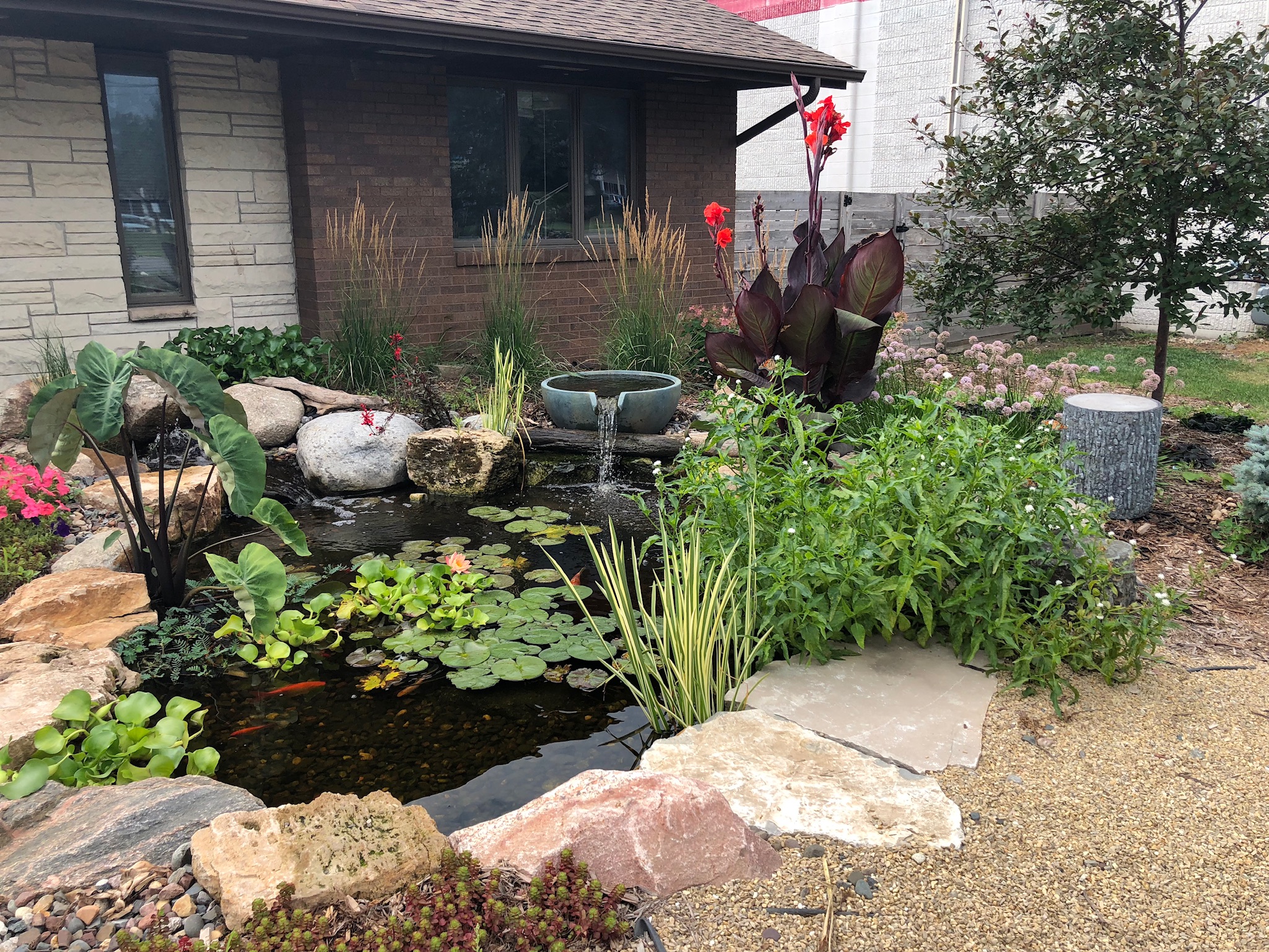
- Marginal Plants: Place plants like water lilies or irises on the pond’s shelf. These plants help maintain water quality by absorbing nutrients and providing shade.
- Oxygenating Plants: Consider adding underwater oxygenating plants like hornwort or anacharis to help with water filtration and oxygenation.
9. Introduce Koi Fish
- Acclimate the Koi: Once the pond has cycled (usually 3-4 weeks), you can introduce koi fish. Float the koi bags in the water for 15-20 minutes to acclimate them to the pond’s temperature before releasing them.
- Maintain Water Quality: Regularly test the water and maintain the filter and pump to ensure a healthy environment for your koi.
Ongoing Maintenance
- Clean Filters: Regularly clean the filters and skimmer (if installed) to ensure good water quality.
- Monitor Water Levels: In hot summer months, ponds can lose water due to evaporation, so you may need to add water occasionally.
- Check for Debris: Remove leaves and other debris to prevent clogging the pump or disrupting water chemistry.
- Feed Koi Moderately: Overfeeding koi can lead to poor water quality. Feed only what they can consume in a few minutes.
Contact Us For More Information
By following these steps, you’ll have a beautiful 2-foot-deep, Aquascape style ecosystem koi pond that provides a relaxing focal point for your outdoor space. Proper planning and installation will ensure your koi thrive in their new environment. However, if this sounds like more then you want to tackle on your own, contact us to learn more about Urban Landworks installing a koi pond, or other water feature, in your Bloomington, Eden Prairie, Minnetonka, and surrounding areas, MN yard!
Urban Landworks
Serving Bloomington, Eden Prairie, Minnetonka, Surrounding Areas Of Hennepin, Scott, Ramsey, Dakota County, Minnesota (MN)
Phone: 952-884-1672
Contact Us Directly: https://urbanlandworks.com/urban-landworks-contact-us-bloomington-mn/